
The Emergency Provisions in the Indian Constitution are a critical topic for the UPSC examination, testing an aspirant's understanding of the delicate balance between national security and individual liberties.
Let's break down each type of emergency in detail.
Part I: National Emergency (Article 352)
This deals with an emergency threatening the security of India or a part of its territory.
What the Article Says (Core Provisions)
Grounds for Proclamation: The President can declare a National Emergency when the security of India or a part of it is threatened by (i) war, (ii) external aggression, or (iii) armed rebellion.
4 The term "armed rebellion" was inserted by the 44th Amendment, replacing the original, more ambiguous term "internal disturbance."
5
Presidential Proclamation: The President can declare such an emergency only on the written recommendation of the Union Cabinet.
6 This is a crucial safeguard added by the 44th Amendment.Parliamentary Approval: The proclamation must be approved by both Houses of Parliament within one month from the date of its issue.
Majority Required: The approval requires a special majority (a majority of the total membership of that house and a majority of not less than two-thirds of the members of that house present and voting).
Duration: Once approved, the emergency continues for six months and can be extended indefinitely with parliamentary approval every six months.
7 Revocation: The President can revoke the emergency at any time. The Lok Sabha can also pass a resolution with a simple majority disapproving its continuation, making it obligatory for the President to revoke it.
8
Historical Context: Why Was It Included?
The framers of the Constitution, including Dr. B.R. Ambedkar, were acutely aware of the threats India faced from both external aggression and internal fissiparous tendencies. They drew lessons from the Government of India Act, 1935. The rationale was to create a strong central government that could hold the country together and protect its integrity in times of crisis. Dr. Ambedkar acknowledged the potential for misuse but defended these provisions as a "safety valve" necessary for preserving the state itself.
Actual Instances of Use/Misuse: The 1975 Emergency
A National Emergency has been declared three times:
1962-1968: During the India-China war (on grounds of external aggression).
1971: During the India-Pakistan war (on grounds of external aggression).
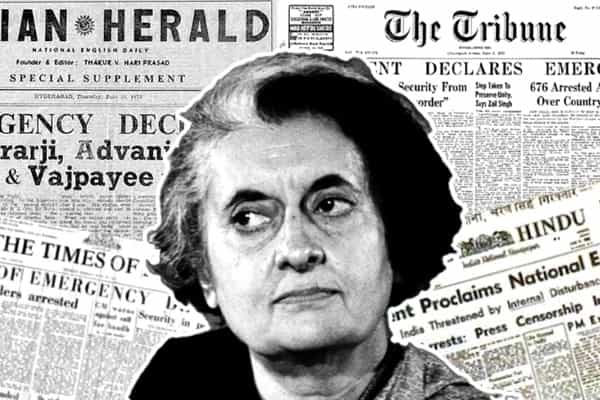
1975-1977: This is the most controversial instance, declared by Prime Minister Indira Gandhi.
11 Grounds: The official ground was "internal disturbance" arising from the political turmoil following the Allahabad High Court's judgment in State of Uttar Pradesh v. Raj Narain, which found Mrs. Gandhi guilty of electoral malpractices.
Misuse: It is widely considered a misuse of constitutional provisions to protect personal political power.
Fundamental Rights, including the Right to Life and Liberty (Article 21), were suspended.
12 Press censorship was imposed (Press Council of India Act was repealed).
13 Thousands of political opponents, journalists, and activists were arrested under preventive detention laws like the Maintenance of Internal Security Act (MISA).
14 The highly controversial 42nd Amendment ("Mini-Constitution") was passed, which drastically altered the Constitution to increase executive power.
15
Major Court Judgments
A.D.M. Jabalpur v. Shivkant Shukla (1976):
16 Also known as the Habeas Corpus case, this is one of the most infamous judgments in the Supreme Court's history. The Court held that during an emergency, the right to move any court for the enforcement of Fundamental Rights under Article 21 (Right to Life and Personal Liberty) could be suspended. This gave the executive unchecked powers of detention. This judgment was effectively overturned by the 44th Amendment.Minerva Mills v. Union of India (1980): The Supreme Court struck down clauses in the 42nd Amendment that gave Parliament unlimited power to amend the Constitution and kept such amendments beyond judicial scrutiny.
17 The Court reaffirmed the "basic structure" doctrine and the importance of judicial review, thereby limiting Parliament's power even during an emergency.
Problems or Loopholes Seen in Implementation
Vague Grounds: The term "internal disturbance" was dangerously vague and could be interpreted broadly by the executive, as seen in 1975.
18 Concentration of Power: The provisions allowed for the concentration of power in the executive (Prime Minister's Office) without adequate checks.
19 Lack of Safeguards: Prior to the 44th Amendment, the decision to impose an emergency was at the sole discretion of the Prime Minister, who could just advise the President without consulting the cabinet.
Safeguards Added by the 44th Amendment (1978)
The Janata Party government, which came to power after the Emergency, enacted the 44th Amendment to prevent its future misuse.
Replaced "internal disturbance" with "armed rebellion."
20 Made the written advice of the Union Cabinet mandatory.
21 Reduced the time for parliamentary approval from two months to one month.
22 Introduced the requirement of a special majority for approval.
Established a mechanism for its revocation by the Lok Sabha.
Crucially, it made Articles 20 and 21 non-suspendable even during a National Emergency.
23
How it Affects Federalism, Fundamental Rights, and Democracy
Federalism: The federal structure essentially becomes unitary.
24 Legislative: Parliament gains the power to make laws on subjects in the State List.
Executive: The Centre is empowered to give executive directions to any state on any matter.
25
Fundamental Rights (FRs):
Article 358: Automatically suspends the six rights under Article 19 (freedom of speech, assembly, etc.) for the duration of the emergency (but only on grounds of war or external aggression, not armed rebellion).
26 Article 359: Empowers the President to suspend the right to move courts for the enforcement of other FRs, except for Articles 20 and 21.
Democracy:
The life of the Lok Sabha and State Assemblies can be extended by one year at a time.
27 It places democracy and civil liberties at the mercy of the executive, leading to a potential authoritarian regime.
28
Prelims Facts
Feature | Provision |
Article | 352 |
Grounds | War, External Aggression, Armed Rebellion |
Declared by | President, on the written advice of the Cabinet |
Approval Time | 1 month |
Majority | Special Majority |
FRs Suspended | Art. 19 (automatic), others by Presidential order |
FRs NOT Suspended | Articles 20 and 21 |
Mains-Useful Critical Analysis
The provision for National Emergency presents a classic dilemma. On one hand, it is a necessary tool for a state to protect its integrity against existential threats. The framers' foresight in including such a provision cannot be denied. On the other hand, the 1975 Emergency starkly demonstrated its potential to be used as a political tool to dismantle democracy from within.
Part II: President’s Rule/State Emergency (Article 356)
This deals with the failure of constitutional machinery in a state.
What the Article Says (Core Provisions)
Grounds for Proclamation: The President can issue a proclamation if he is satisfied that a situation has arisen in which the government of a state cannot be carried on in accordance with the provisions of the Constitution.
Basis of Decision: This satisfaction can be based on a report from the Governor of the state or otherwise (i.e., even without the Governor's report).
Consequences: The President can:
Assume all executive functions of the state government.
Declare that the powers of the state legislature shall be exercised by the Parliament.
Make any other incidental provisions necessary to give effect to the proclamation.
Parliamentary Approval: Must be approved by both Houses of Parliament within two months with a simple majority.
Duration: It can continue for six months. It can be extended for a maximum period of three years with parliamentary approval every six months.
Historical Context: Why Was It Included?
This provision was also borrowed from the Government of India Act, 1935.
Actual Instances of Use/Misuse
Contrary to Dr. Ambedkar's hope, Article 356 has been one of the most misused provisions of the Constitution, invoked over 125 times.
Early Misuse: It was first used in Punjab in 1951. In 1959, it was used to dismiss the democratically elected Communist government in Kerala, a move widely seen as politically motivated.
Rampant Misuse: During the 1970s and 1980s, it became a common tool for the central government to dismiss opposition-ruled state governments on flimsy grounds like "maladministration" or political differences.
36
Major Court Judgments
S.R. Bommai v. Union of India (1994): This is a landmark judgment that put an end to the arbitrary dismissal of state governments.
37 The Supreme Court laid down strict guidelines for the imposition of President's Rule:38 The proclamation is subject to judicial review. The court can examine the relevance and legality of the material on which the President's satisfaction is based.
The onus is on the Centre to prove that a situation of constitutional breakdown exists.
The State Assembly cannot be dissolved immediately. It can only be kept in suspended animation until Parliament approves the proclamation. If Parliament disapproves, the assembly is reinstated.
The court has the power to restore the dismissed state government if the proclamation is found to be unconstitutional.
The use of Article 356 is justified only in cases of a complete breakdown of constitutional machinery, not for securing a political advantage for the ruling party at the Centre.
39
What Problems or Loopholes were seen in Implementation?
Partisan Role of Governor: Governors often acted as agents of the central government rather than as impartial constitutional heads.
Vague Grounds: "Failure of constitutional machinery" was interpreted very broadly.
No Prior Warning: State governments were often dismissed without any prior warning or opportunity to rectify the situation.
40 Undermining Federalism: It was used to systematically weaken state governments and centralize power.
Safeguards Added Later
The primary safeguards have not come from a constitutional amendment but from the guidelines laid down in the S.R. Bommai judgment, which have now become the constitutional convention. The judgment acts as a powerful deterrent against its misuse.
How it Affects Federalism, Fundamental Rights, and Democracy
Federalism: It is a direct blow to the principle of federalism, as it allows the Union executive to take over the entire administration of a state, effectively converting the federal system into a unitary one for that state.
Fundamental Rights: It does not directly affect the Fundamental Rights of citizens. People can continue to enjoy their rights and move courts.
Democracy: It undermines the democratic mandate of a popularly elected state government and the will of the state's electorate.
Prelims Facts
Feature | Provision |
Article | 356 |
Grounds | Failure of constitutional machinery in a state |
Declared by | President, based on Governor's report or otherwise |
Approval Time | 2 months |
Majority | Simple Majority |
Max Duration | 3 years (with periodic approval) |
Mains-Useful Critical Analysis
Article 356 is arguably the most contentious provision in the Constitution. While intended as a tool to preserve constitutionalism, it became an instrument for subverting it. The history of its application reveals a stark departure from the federal spirit. However, the Supreme Court's intervention in the S.R. Bommai case has been a game-changer.
Part III: Financial Emergency (Article 360)
This deals with a threat to the financial stability or credit of India.
What the Article Says (Core Provisions)
Grounds for Proclamation: The President can issue a proclamation if he is satisfied that a situation has arisen whereby the financial stability or credit of India or of any part of its territory is threatened.
Parliamentary Approval: Must be approved by both Houses of Parliament within two months with a simple majority.
Duration: Once approved, it continues indefinitely until it is revoked. There is no requirement for repeated parliamentary approval.
Historical Context: Why Was It Included?
The framers had the experience of the Great Depression in mind and wanted to equip the Union with sufficient powers to take firm action in the event of a severe economic crisis that could threaten the country's stability.
Actual Instances of its Use
A Financial Emergency under Article 360 has never been declared in India to date.
How it Affects Federalism and Financial Autonomy
This provision has a severe impact on the financial autonomy of the states. During a Financial Emergency:
The Union can give financial directions to any state.
The President can direct the states to reduce the salaries and allowances of all or any class of persons serving in the state.
44 The President can require all Money Bills or other financial bills passed by the state legislature to be reserved for his consideration.
The President can also issue directions for the reduction of salaries and allowances of persons serving the Union, including the judges of the Supreme Court and High Courts.
45
Prelims Facts
Feature | Provision |
Article | 360 |
Grounds | Threat to financial stability or credit of India |
Declared by | President |
Approval Time | 2 months |
Majority | Simple Majority |
Duration | Indefinite, until revoked |
Mains-Useful Critical Analysis
Article 360 grants sweeping financial powers to the Union, completely overriding the states' financial autonomy.
Part IV: Comparative Analysis (Mains-Level)
Germany: The Constitution of the Weimar Republic had a provision (Article 48) that allowed the President to suspend civil rights and rule by decree in an emergency.
48 This provision was systematically used by Hitler to legally dismantle democracy and establish his dictatorship. The modern German Constitution (Basic Law) has learned from this and has very stringent, well-defined emergency provisions that are much harder to invoke and have stronger parliamentary and judicial oversight.USA: The US Constitution does not have a single, codified provision for declaring a national emergency in the Indian sense. The President has certain emergency powers, derived from various statutes and constitutional roles (like Commander-in-Chief), but these are subject to strong checks and balances from Congress and the judiciary. There is no provision for dismissing a state government.
UK: As the UK has an uncodified constitution, there are no formal emergency provisions. Parliament can enact laws to grant the executive extraordinary powers as needed, such as the Civil Contingencies Act 2004. These powers are temporary and under direct parliamentary scrutiny.
Conclusion: The Indian emergency provisions are unique in their scope and detail. Unlike the US or UK, they are explicitly written into the Constitution and allow for a much greater degree of power centralization.